Most documented sign languages trace their roots to Deaf schools or urban Deaf communities. New research out of Mexico points to something different: a sign language rooted directly in an Indigenous culture and language, developed by Deaf residents of a small Nahuatl-speaking town in the mountains of Morelos.
Fieldwork in Hueyapan
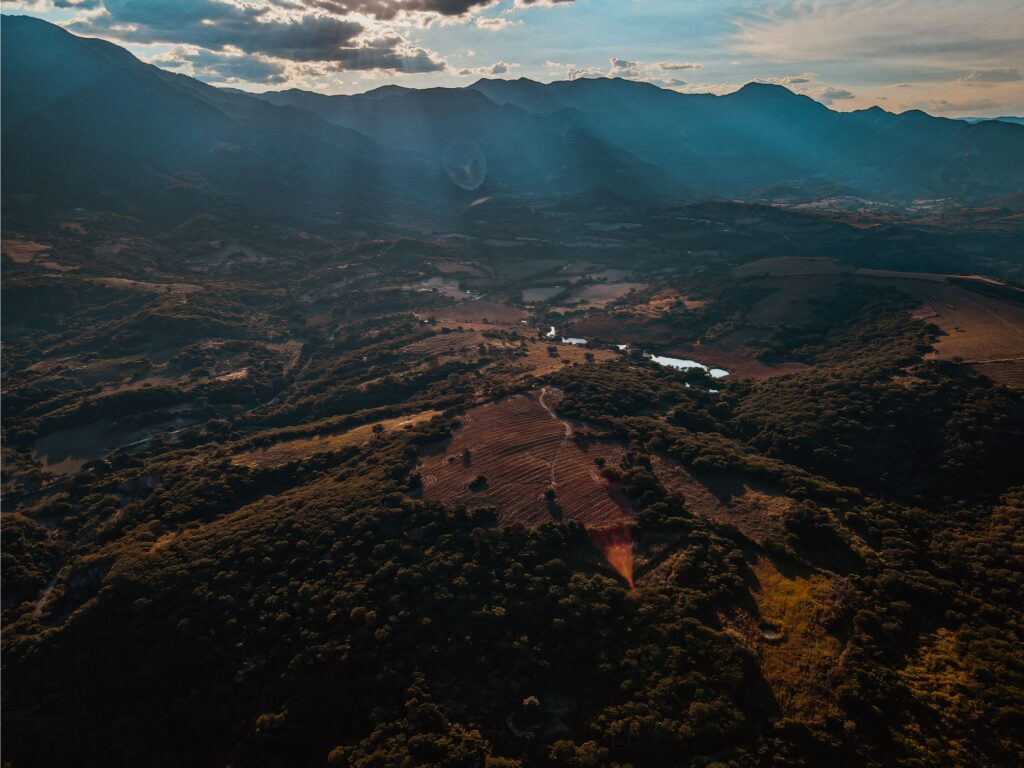
Researcher Alejandro Cerda García, of the Universidad Autónoma Metropolitana, spent 2023 and 2024 conducting fieldwork in Hueyapan, Morelos, a town where roughly 97 percent of the population speaks Nahuatl, one of Mexico’s most widely spoken Indigenous languages. Using participant observation, interviews with Deaf residents and their families, and audiovisual documentation, Cerda García set out to formally document what he calls the Lengua de Señas Náhuatl de Hueyapan, or Nahuatl Sign Language of Hueyapan (LSNH). The research was published in the academic journal Argumentos: Estudios Críticos de la Sociedad in 2026.
A Vocabulary Tied to Nahuatl Culture
The study’s central finding is striking: LSNH includes its own distinct vocabulary tied to Nahuatl cultural categories and concepts that have no direct equivalent in Spanish or in Mexican Sign Language (LSM), the country’s primary national sign language. That vocabulary is passed down across generations within the community and used well beyond the home, not confined to private family communication the way many home sign systems are.
Why the “Emerging Language” Label Falls Short
Cerda García’s research also makes an important conceptual argument. He suggests that common academic frameworks describing certain sign languages as “emerging languages,” typically applied to systems that develop spontaneously among Deaf people with no prior sign language exposure, don’t fully capture what’s happening in communities like Hueyapan. Instead, he proposes classifying LSNH as an Indigenous or “originario” sign language in its own right, a sign language rooted in and shaped by a specific Indigenous culture, deserving of community-driven validation and further dedicated linguistic study on its own terms.
Part of a Broader Documentation Gap
This research directly addresses something linguists have flagged as a significant blind spot: sign languages used within Mexico’s Indigenous communities remain dramatically under-documented compared to national sign languages like LSM. Similar work has begun elsewhere, including documentation of Yucatec Maya Sign Language among Indigenous Maya communities, but researchers agree there’s a long way to go in mapping and preserving the full range of sign languages tied to Indigenous cultures across the Americas.
Why This Matters
Every properly documented sign language adds to a fuller, more accurate picture of how Deaf people around the world actually communicate, not filtered through the assumption that every Deaf person’s language traces back to a national standard or an urban Deaf school. For Indigenous Deaf communities like Hueyapan’s, formal documentation is also a form of recognition, an acknowledgment that their language and their culture are inseparable, and worth preserving on their own terms.
The Takeaway
Nahuatl Sign Language of Hueyapan is a reminder that the story of sign language diversity is still being written, and that some of the most interesting chapters are found not in major cities or international conferences, but in small communities that have quietly built rich linguistic traditions of their own.
Interested in International Sign or the global Deaf community? Follow OneDeafWorld.com for more coverage of IS, accessible technology, and events from around the world.