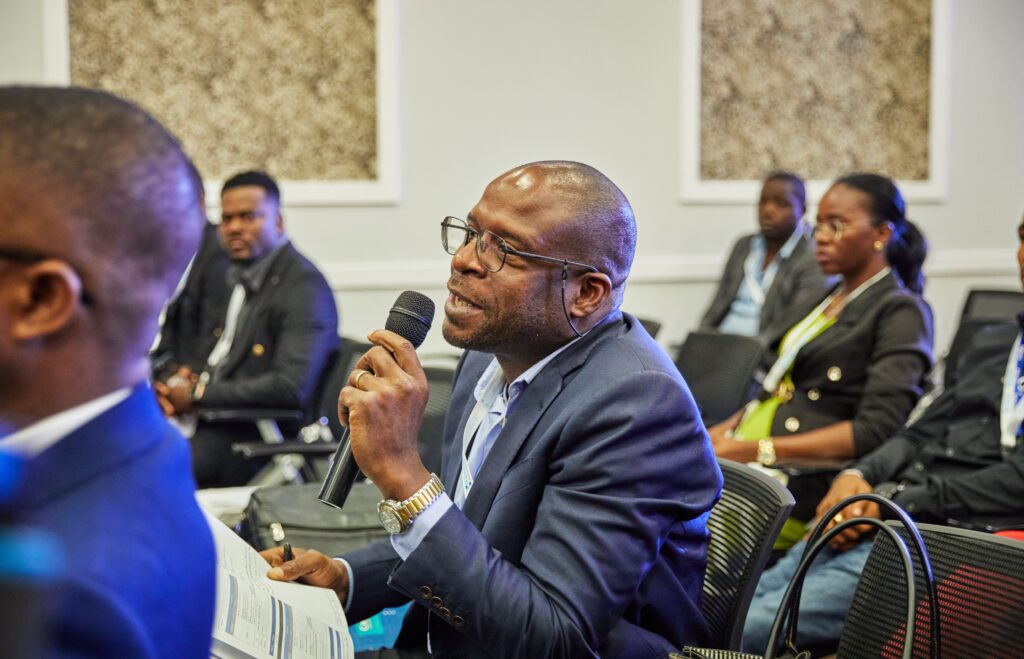
International Sign and the global Deaf community aren’t only shaped by events in Europe and North America. This March, Kigali, Rwanda hosted a gathering that put African Deaf advocacy squarely in the spotlight: the African Federation of Sign Language Interpreters (AFSLI) Conference.
A Homecoming for WASLI
Held March 23–25, 2026, and organized in partnership with the Rwanda National Union of Sign Language Interpreters and the World Association of Sign Language Interpreters (WASLI), the conference brought together interpreters, researchers, and Deaf community representatives from across the continent. For WASLI, the trip carried extra significance. As board member Debra Russell noted following her keynote, it marked a return to the very continent where WASLI was founded back in 2005.
Russell’s keynote focused on pathways to training for sign language interpreters, sparking conversations about how training and capacity-building need to be shaped by regional and local knowledge rather than a one-size-fits-all approach, a theme that echoed throughout the conference.
Rwanda’s Deaf Community Uses the Moment to Push for Recognition
The conference also became a platform for a specific local cause. During the gathering, Rwanda’s Deaf community renewed its call for official recognition of Rwandan Sign Language. Allan Mutabazi, executive secretary of the Rwanda National Union of the Deaf, put the issue directly: sign language is Rwanda’s Deaf community’s native language, and like in other countries, it deserves official recognition.
There’s already some momentum behind the push. Rwanda’s government approved a national sign language dictionary in 2023, a step advocates hope will eventually pave the way for parliamentary recognition and integration into the country’s education system. More than 70,000 Deaf people live in Rwanda, along with over 1,000 Deafblind individuals who also rely on sign language.
Why Gatherings Like This Matter
Conferences like AFSLI do double duty. They build professional capacity among interpreters across a continent that’s home to dozens of distinct national sign languages, while also creating a platform for local Deaf communities to advocate for change on their home turf, with international allies standing alongside them. It’s a model that reflects exactly what International Sign and global Deaf advocacy networks exist to support: connection across borders, in service of stronger rights at home.
Interested in International Sign or the global Deaf community? Follow OneDeafWorld.com for more coverage of IS, accessible technology, and events from around the world.